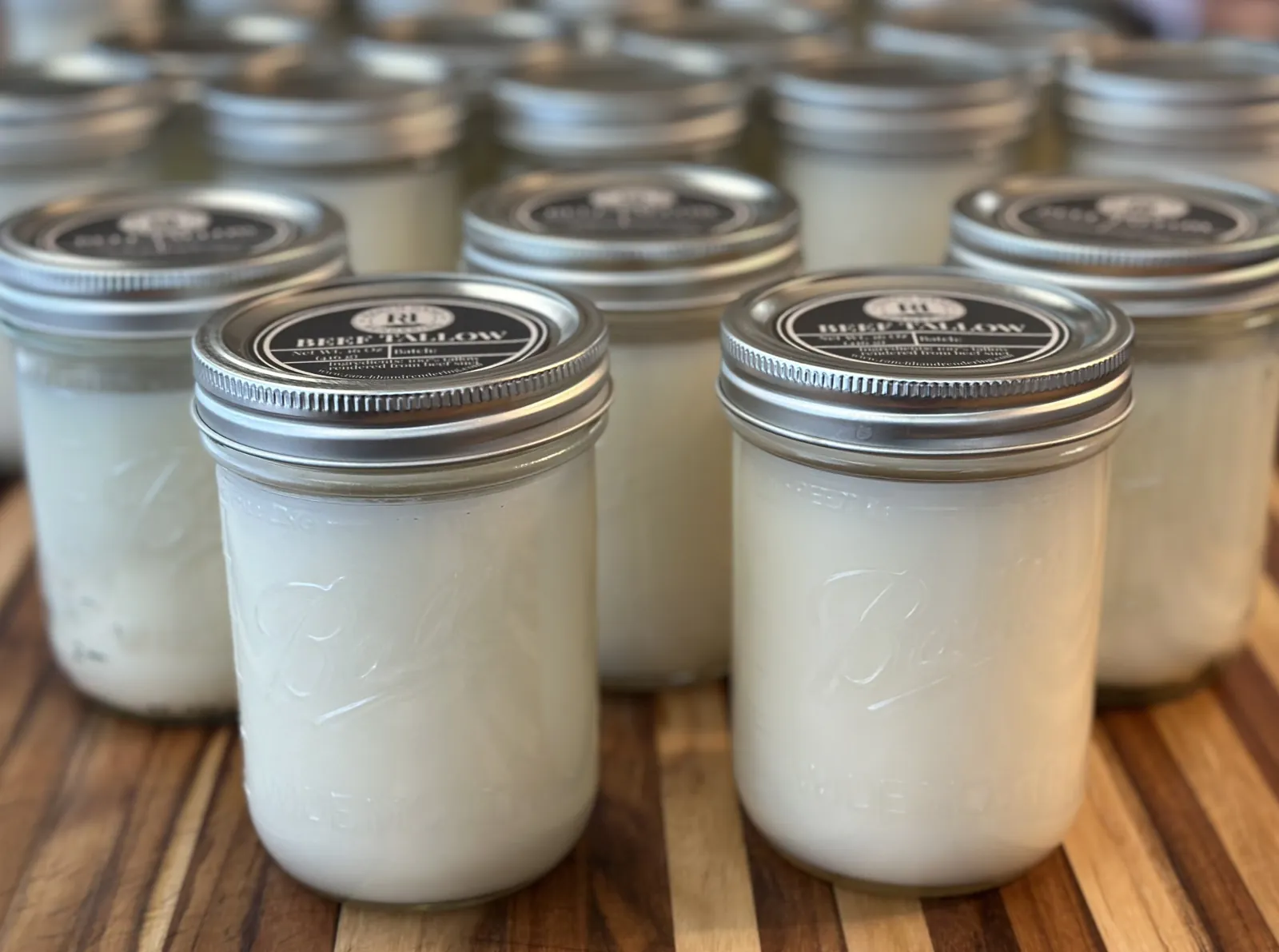
More home cooks are returning to animal fats, tallow in particular. This piece looks at what's driving the shift, what the practical differences are in the kitchen, and what to look for when sourcing cooking tallow.
For most of human history, cooking fat came from animals. Lard from pigs. Butter from dairy. Tallow from beef. Stable, single-ingredient, produced by the same animals that provided meat and dairy. The idea of replacing any of that with industrially extracted seed oils simply didn't exist.
Then, over several decades in the mid-20th century, it changed. The shift wasn't driven by nutritional research. It was driven by agricultural economics, industrial innovation, and dietary guidance that has since been substantially revised and complicated.
How Seed Oils Entered the Kitchen
The story starts earlier than most people realize. Cottonseed oil (a byproduct of cotton production, previously used in soap and candles) began entering the food supply in the early 1900s when Procter and Gamble developed Crisco, a hydrogenated vegetable shortening designed to replace lard. Modern. Clean. That was the positioning.
What followed was a broad expansion of the industrial oilseed complex. Soybean, canola, corn, cottonseed, and sunflower oils, all extracted through processes involving high heat, chemical solvents, and deodorization to neutralize the taste and smell of something that would otherwise be unpleasant, became widely available and cheap.
The case for seed oils ran on two tracks. The crops were profitable and scalable. And nutrition guidance from the 1950s and 60s, particularly around saturated fat and cardiovascular health, positioned plant-based polyunsaturated oils as the right alternative to animal fats. That guidance shaped decades of purchasing decisions.
What the Science Has Looked Like Since
The original saturated fat hypothesis (most closely associated with physiologist Ancel Keys) held that dietary saturated fat increased the risk of heart disease. It became foundational nutrition policy for decades. But research since has complicated the picture considerably. The original data has been criticized for selection bias and confounding variables, and the relationship between dietary saturated fat and cardiovascular outcomes has proven far harder to characterize than early guidance suggested.
We're a tallow producer, not a clinical research team. This is our read of a contested body of literature, and anyone who digs into it will find serious researchers on both sides. What we can speak to with more confidence is the practical chemistry of cooking fats. That's a separate question. It has cleaner answers.
Heat Stability: The Practical Case for Tallow
Polyunsaturated fatty acids (the dominant fat type in most seed oils) are chemically reactive. The double bonds in their carbon chains respond to heat, light, and oxygen. Cook with a high-polyunsaturated oil at elevated temperatures and those fatty acids oxidize.
Oxidation produces aldehydes and other byproducts. Some research links these compounds to cellular damage, though the picture in humans isn't fully settled. What is established: the oxidation occurs, it's measurable, and it increases with heat and repeated use.
Saturated and monounsaturated fats (the dominant types in tallow) behave differently. Saturated fats have no double bonds and don't oxidize in the same way. Monounsaturated fats have one double bond and are meaningfully more stable under heat than polyunsaturated fats. That's the chemistry behind tallow's long track record in high-heat cooking. It's not complicated.
What Home Cooks Are Actually Finding
We hear it from customers when they switch. Food cooks differently at high heat: better crust, more predictable pan behavior, richer flavor. Smoke management is easier. Tallow's smoke point is high and the fat doesn't break down quickly the way some seed oils do.
There's also the label question. Tallow is a single ingredient: rendered beef suet, filtered. No extraction solvents, no deodorization, no additives. For cooks who've started reading labels on everything else in their kitchen, that simplicity carries real weight.
Tallow from pasture-raised cattle also carries fat-soluble vitamins A, D, E, and K, along with a fatty acid profile that includes conjugated linoleic acid. Some research associates that profile with nutritional value. We'd call that an area of ongoing inquiry, not settled fact. From where we stand, the sourcing story and the cooking performance are compelling enough without it.
What to Look for When Sourcing
Not all cooking tallow is produced the same way. A few things to pay attention to:
Source matters. Pasture-raised suet produces a different fat than feedlot suet: different fatty acid ratios, different CLA content, different fat-soluble vitamin concentrations. Ask where the suet comes from. If the answer is vague, that's information.
Rendering method matters. How tallow is rendered affects the finished product. More important than the method: does the producer tell you what it is and speak honestly to their process? Ask.
No chemical processing. Some tallow is bleached or chemically deodorized. That defeats most of the point. Look for tallow filtered mechanically and processed without chemical additives.
People are switching to tallow because it cooks better and they know what's in it. The health debate will keep going. The kitchen case doesn't need it.
Try Cooking with Beef Tallow
Ranch Hand Rendering cooking tallow, dry rendered from local Texas suet, filtered, mild natural beef aroma. Available in 16 oz jars and larger.