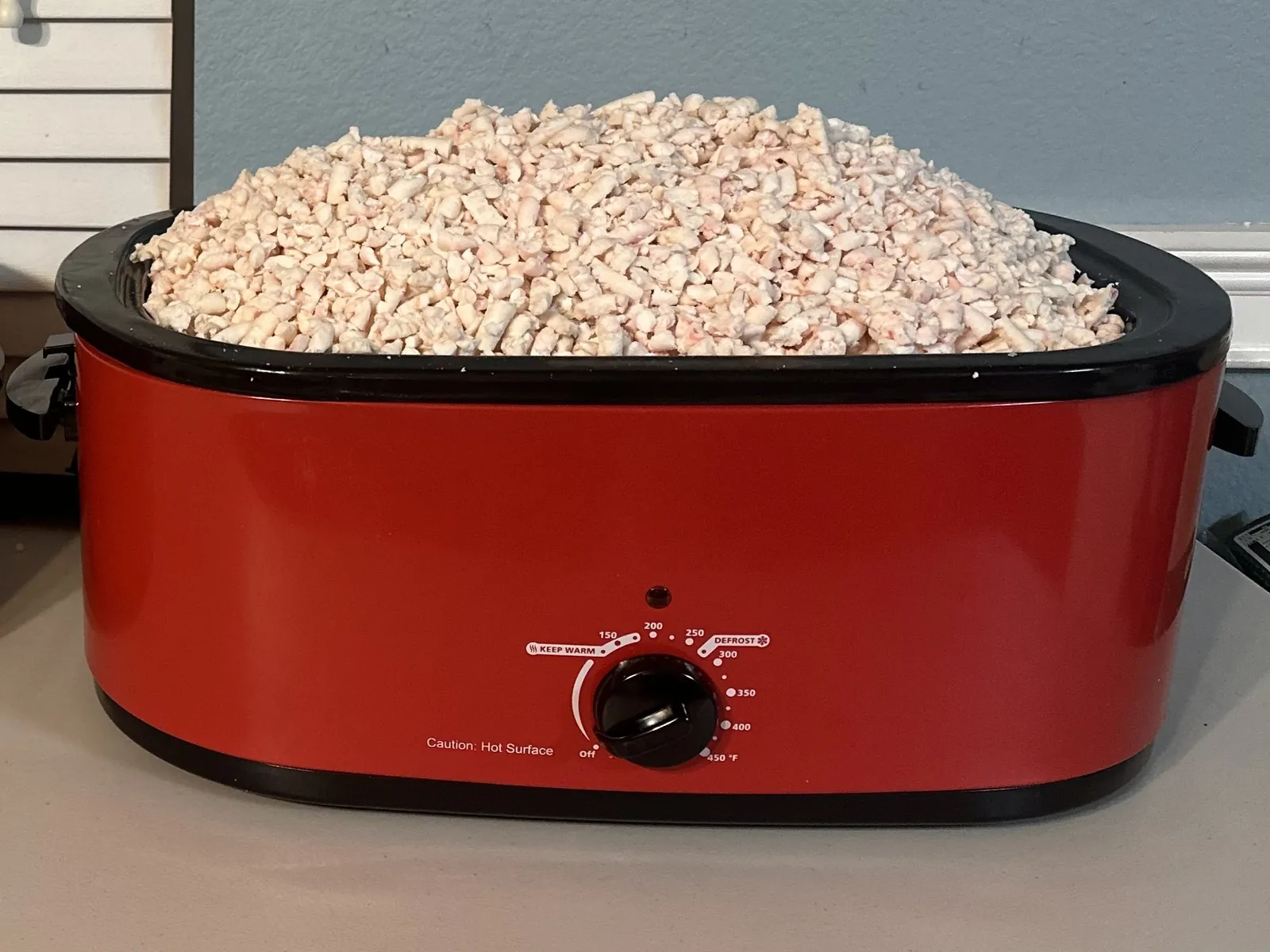
Most tallow producers won’t tell you how their product is made. We will, including why we use different rendering methods for our two product lines, and the specific reason behind each.
If you’ve spent time looking at tallow brands, you’ve noticed that most of them talk about sourcing and very few talk about rendering. The labels say “grass-fed” or “pasture-raised.” What they rarely say is how the fat was actually processed after it left the animal, or why.
We think that’s a problem. So here’s our answer, plainly.
Two Products. Two Methods. One Reason Each.
Ranch Hand Rendering uses different rendering methods for its two product lines. Cooking tallow is dry rendered. Formulation tallow is wet rendered. This isn’t inconsistency. It’s the method matched to what the product is actually for.
Cooking tallow: dry rendered. When fat goes into your body, you want everything the original material has to offer: the fatty acid profile, the fat-soluble vitamins, all of it. Dry rendering heats fat tissue without added water, which keeps that full profile intact through the process. For a product you eat, that matters.
Formulation tallow: wet rendered. Water-soluble compounds aren’t bioavailable through skin. They don’t penetrate. So in a topical application, you don’t lose anything meaningful by using wet rendering. And wet rendering suits the cosmetic application well. For a product that goes on your skin, not in your body, the tradeoff doesn’t exist the same way.
What We Actually Control
Regardless of method, the variables that produce consistent, usable tallow are the same:
Suet selection. We start with local Texas suet, selected before production. The raw material determines the ceiling. No rendering method compensates for poor-quality input.
Temperature management. Too hot and the fat degrades. Too low and the render is incomplete. We monitor temperature on every batch.
Filtration. Multi-stage mechanical filtration. No chemical deodorizers, no bleaching agents. The result is a clean, finished fat with its natural character intact.
Why We’re Telling You This
Most producers pick a method, put it on the label as a quality signal, and move on. “Dry rendered” has been used that way for years, as a differentiator that sounds premium without any explanation of why it matters or when it doesn’t.
We do it differently: explain what we do, how we do it, and why. Not as a marketing posture. Because we render every batch ourselves. The reasoning isn’t theory, it’s what we do every week. If the answer holds up, it doesn’t need label language behind it. Ask us anything.
See the Full Process
Process details, standards, and what we hold every batch to.