How illness, real food, and firsthand work inside a Texas processing facility led me to build Ranch Hand Rendering.
My name is Ron Jimenez. My background is in technology and academics, which matters because almost everything I know about tallow I had to learn on purpose, from scratch, by being somewhere most people in this industry have never been.
I'm a husband of 20 years and a father of four, grounded in my Orthodox Christian faith and in the belief that what we eat connects to something larger: our families, our communities, and the traditional ways of living that sustained human health long before industrial food entered the picture.
I didn’t come to this through ranching. I came through getting sick.
Not sick in a manageable way. Sick in the way that takes years before you understand what’s happening. Health problems from childhood, getting worse instead of better by the time I was an adult. The medical system got every reasonable chance. It didn’t have an answer. I spent nearly a decade on disability. Doctors, specialists, prescriptions that addressed symptoms without finding the cause. At some point you stop waiting for someone else to figure it out.
What broke the pattern was food. Not a program. Just paying close attention to what I was eating and what changed when I stopped eating certain things. Seed oils went first. Then I started eating more animal fat, more red meat, less of what shows up in every processed product. I found the carnivore and ancestral health world. I know how that registers. I’m not interested in arguing about it. It worked when nothing else had.
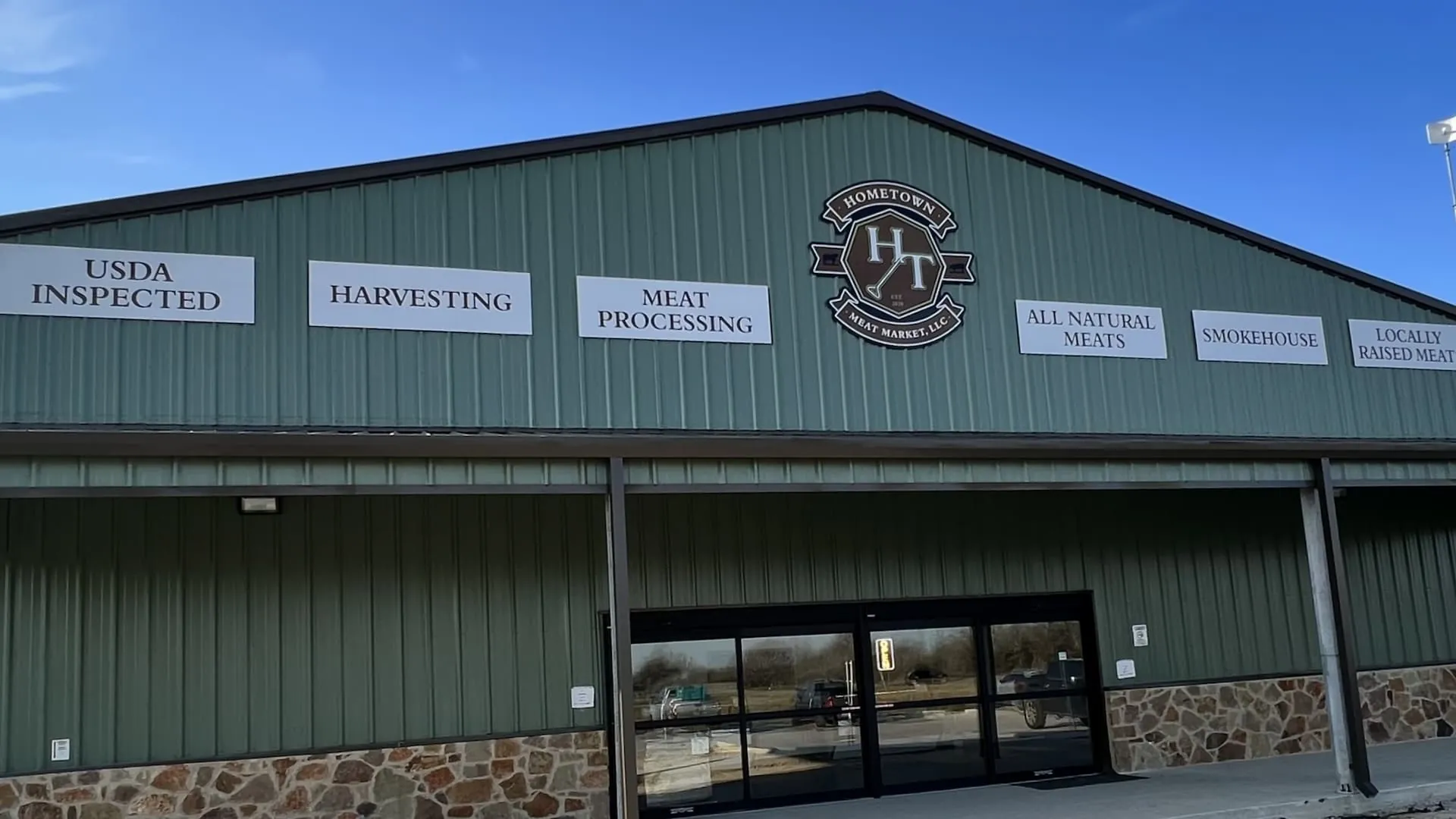
Once food became something I took seriously I didn’t want to keep reading about it from a distance. I started working around ranches. The Classen Ranch. Time alongside an Austin rancher. And eventually Hometown Meat Market in Luling, inside the processing facility. That’s where the education actually started.
What You Learn on the Floor
Most tallow brands have never seen what I saw there. That’s not a knock, it’s just how the market is built. Most people source fat from a distributor, render it in a commercial kitchen, put a label on it. Nothing dishonest about that. But it means they’re working from the middle of the supply chain, not the beginning.
I worked at the beginning.
Cattle came in from ranches all over Texas. Dozens of operations. Grass-fed and finished, pasture-raised and grain-finished, conventional, everything. I met the ranchers in person. Not through a rep, not on the phone. Face to face. Shook their hands, heard what they were actually running. You get things in those conversations that don’t show up in any spec sheet.
You also learn things you can only learn by handling the fat itself.
Grass-finished animals carry beta-carotene from pasture into their tissue. It makes the fat yellow, sometimes deeply so. That color isn’t a surface quality; it’s in the fat, and it doesn’t process out. The smell is different too. Grass-finished suet has an earthier, more complex character that survives the render. You can’t make it disappear without chemical intervention. I learned to recognize these things by handling fat from known sources, batch after batch, watching how it behaved from raw suet to finished tallow.
I also learned what supply chain drift looks like from the inside. How claims that sound definitive on a label get softer the closer you get to them. How a ranch can be running a good program and still produce fat that wasn’t handled well by the time it reached a renderer. How “grass-fed” can mean fifty different things depending on who’s using it and what accountability they’re actually operating under. The gap between the label and the product isn’t always dishonesty. Sometimes it’s just distance: too many steps between the animal and the jar, with no one paying attention at each one.
That distance is what I was building against from the first batch.
The First Batch
I was not casual about it. Years sick, finally making something I believed in for my own family, that’s a different motivation than wanting to start a product line.
I read everything. Tested methods, tracked temperatures, paid attention to how the product crystallized, how it cooled, what the smell told me about what had happened upstream. The finished tallow is a record of every decision that came before it. I was trying to learn how to read that record.
When other people started asking where they could get it, I didn’t think of it as a business decision. It was an extension of the same standard. If I wasn’t willing to give it to my family, I wasn’t willing to sell it. That hasn’t changed.
What the Market Gets Wrong
The tallow industry grew fast, mostly on the back of the ancestral health movement. Some of that growth brought producers with real standards. It also brought a long tail of brands running on credential language (grass-fed, pure, small-batch) without the sourcing or process knowledge to back it up.
I know what the real standard looks like because I’ve been close enough to the source to see it. I know how much genuine grass-finished suet actually exists in the U.S. market. And I know that most of what’s being sold under premium labels isn’t it. Not because everyone is lying. Because most people selling it have never been close enough to know the difference between what they’re claiming and what they’re actually moving.
That’s the gap Ranch Hand Rendering exists to close. Not with louder claims. With tighter sourcing, documented process, and a willingness to say plainly what we know and what we don’t. A serious buyer should be able to ask direct questions and get direct answers. If a producer flinches at those questions, the flinch is your answer.
The Standard
Every batch gets judged the same way the first one did. Would I give this to my family?
It’s not a marketing line. It’s the actual question, because it’s the shortest path to an honest answer. Sourcing, handling, rendering discipline, finish, packaging. Every decision in that chain either holds up to that question or it doesn’t.
Ranch Hand Rendering runs out of Central Texas, close to the ranches and processors that supply it. Sourcing is local and traceable. Process is documented. The person running it learned this trade from inside the supply chain, not from a label.
That’s where it started. Still the only standard I know how to hold.
Learn More
Read about the process, or reach out directly with questions about sourcing and availability.